
Table of Contents
- Before You Plant: Assessing Your Small Balcony
- Best Plants for Balcony Gardens: What Thrives in Containers
- Balcony Container Gardening: Pots, Mixes and Drainage
- Going Up: Building a Vertical Balcony Garden
- Growing a Balcony Vegetable Garden in Limited Square Footage
- Watering, Runoff and Keeping the Neighbours Happy
- Seasonal Care and Troubleshooting for Small Balcony Spaces
- Frequently Asked Questions
Last Updated: October 15, 2026
Before You Plant: Assessing Your Small Balcony
A small balcony is not a tiny garden. It is a set of growing conditions you have to read before you buy a single pot.
This guide walks you through the whole process, from checking your light to picking pots that will not cause trouble with the body corporate.
Most beginners skip the assessment step. They buy plants they like, then wonder why the leaves go yellow.
So start here.
Sunlight, Wind and Microclimate
A balcony garden lives or dies by its light. Watch your space for a full day before you plan anything.
Check these things:
- Which hours get direct sun, and which stay shaded
- Whether a wall reflects heat back onto the pots
- How strong the wind gets on the exposed side
North-facing balconies usually get the most sun. South-facing ones stay cooler and shadier. East gets gentle morning light. West gets hot afternoon sun.
Wind matters just as much. A balcony funnels breeze, and tall pots catch it like sails. If your space is exposed, use a screen or a row of sturdier plants as a windbreak.
Load Limits and Safe Placement
Every balcony has a weight limit, and wet potting mix is heavy. This is the part most guides skip entirely.
A few things to keep in mind:
- Check your building’s rules before adding large pots
- Keep the heaviest containers close to the wall or supporting beam
- Spread weight out rather than stacking it in one corner
If you are unsure, ask your body corporate or building manager. It is a quick question that saves a lot of worry.
Best Plants for Balcony Gardens: What Thrives in Containers
The best plants for balcony gardens are compact, tough and suited to your light.
For sunny spots, try tomatoes, chillies, basil and rosemary. These love heat and light.
For shadier balconies, choose lettuce, silverbeet, mint and parsley. They cope with less direct sun.
Good all-rounders include:
- Dwarf and compact varieties of most herbs
- Columnar plants that grow up rather than out
- Hardy flowers like geraniums and petunias
Go for compact plants and columnar types when square footage is tight. They give you height without eating your floor space.
Balcony Container Gardening: Pots, Mixes and Drainage
Balcony container gardening comes down to three things: the right pot, the right mix, and drainage that works. Get these right and everything else gets easier.
Always use a quality potting mix, not garden soil. Garden soil compacts in pots and stops draining.
Every pot needs drainage holes. No exceptions. Water that cannot escape will rot your roots.
Choosing the Right Pot Size
Bigger is not always better on a balcony, but too small is a common mistake. A pot that is too small dries out fast and crowds the roots.
Use this rough guide:
- Herbs: pots around 20-25 cm across
- Lettuce and leafy greens: 25-30 cm
- Tomatoes and larger veg: 30-40 cm or a grow bag
Terracotta dries out faster. Plastic holds moisture longer. Choose based on how often you can water.
Put a saucer or tray under every pot. It catches runoff and stops drips reaching the balcony below, which keeps the peace with neighbours.
Going Up: Building a Vertical Balcony Garden
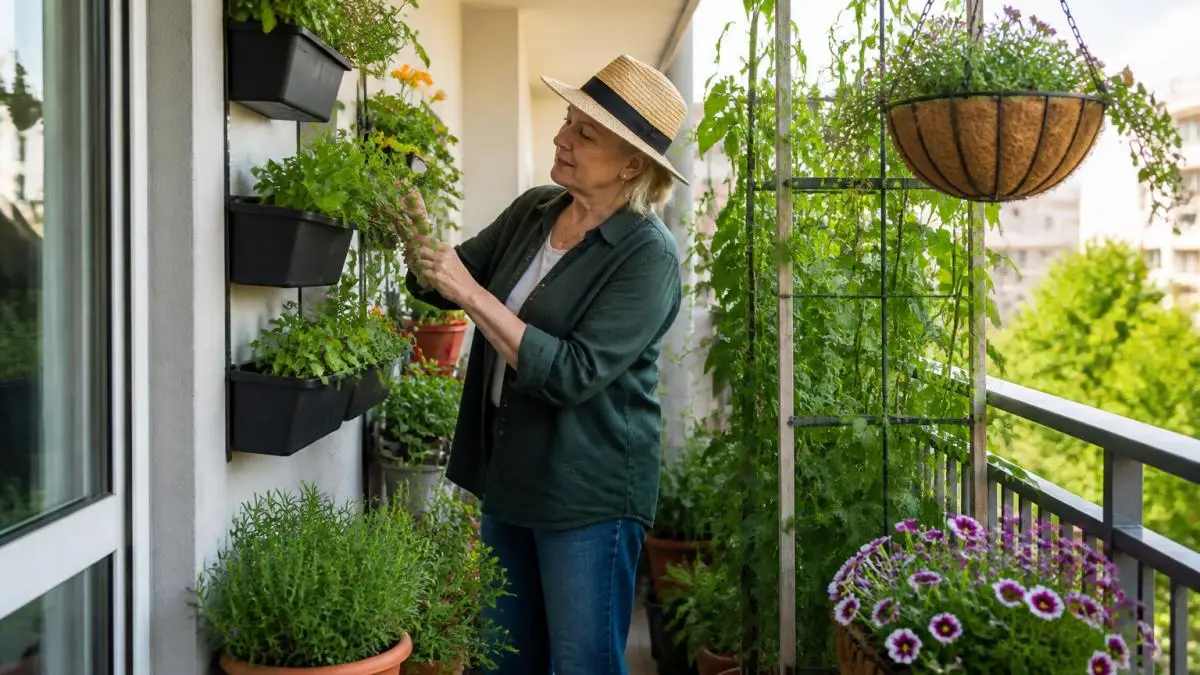
A vertical balcony garden turns a narrow space into a full growing wall. When you run out of floor, you go up, but how you go up matters more than how many planters you buy.
Match the Mounting Method to Your Wall and Your Lease
Not every wall can take every planter. Before you drill, work out what you are fixing into.
- Brick and masonry: the most forgiving surface. Use masonry anchors rated well above the wet weight of the planter. A single 30 cm wall pot with damp potting mix can weigh 10-15 kg, so a row of four is a 40-60 kg load on one wall.
- Rendered or painted surfaces: anchors hold, but the render can crack and spall around the fixing. Use a backing plate or batten to spread the load.
- Timber cladding and balcony ceilings: fix into framing, not just the board. A stud finder is the cheapest tool you will buy for this job.
If you are unsure what is behind the wall, ask your body corporate or building manager before you drill. A quick question now beats patching a wall later.
Wind Loading Is the Hidden Risk Up High
The higher you go, the more the wind pushes. A planter on the fourth floor catches far more breeze than the same planter on the ground, and a balcony funnels that breeze into a tunnel.
Practical rules:
- Keep the heaviest, tallest planters low and against the wall, not on a high shelf.
- Choose squat, wide-based pots over tall narrow ones for exposed spots.
- Secure hanging baskets to a fixing rated for at least twice the wet weight, and check the hook and chain, not just the bracket.
Stack, Shelf and Trellis: Three Ways to Multiply Your Footprint
You have three main vertical systems, and they suit different plants.
- Stackable planters and planter towers give you several levels in one footprint. Best for herbs, lettuce and strawberries. Watch the top tiers, they dry out fastest and need the most water.
- Shelving units let you arrange pots at different heights and move them as the seasons shift. A simple three-tier shelf can hold a whole herb collection. Fix the shelf to the wall or weight the base so it cannot topple.
- Wall-mounted planters and trellises suit climbers. Peas, dwarf beans, cucumbers and climbing flowers grow up instead of out, which saves your limited square footage. Fix the trellis into framing or masonry, and give climbers a little help tying in at first.
Aim to mix these. A trellis on one wall, a shelf against another, and a couple of hanging baskets overhead can triple what you grow in the same space, without tripling the weight in any one spot.
Spread the load. Rather than one heavy tower in a corner, use two or three lighter vertical systems on different walls. It is kinder to the balcony structure and easier to rearrange.
Never hang a planter from a glass balustrade, a lightweight rail, or a fixing you have not checked. Falling pots are a safety risk for anyone below, not just a mess.
Growing a Balcony Vegetable Garden in Limited Square Footage
A balcony vegetable garden is very doable, even in a tight space. The trick is choosing crops that give you a good return for the room they take.
Top picks for small spaces:
- Cherry tomatoes in a large pot or grow bag
- Peas and dwarf beans climbing a trellis
- Leafy greens that you harvest again and again
Cucumbers work too, if you give them something to climb. Train them upward and they take up very little floor space.
Water and feed regularly. Container plants rely on you for everything, so a weekly feed with a balanced fertilizer keeps them producing.
Watering, Runoff and Keeping the Neighbours Happy
Watering is where small balcony gardens run into trouble, and not just with the plants. Runoff dripping onto the balcony below is a fast way to upset neighbours, and in strata buildings it can breach by-laws. Getting the water right is as much about plumbing as it is about plants.
Water in the Morning, and Water Deeply
Water in the morning when you can. Less evaporates, and the plants have moisture for the heat of the day. Water deeply and less often rather than a light daily sprinkle, shallow watering encourages weak roots and leaves the lower mix dry.
A simple test: push a finger 3-4 cm into the mix. If it is dry at that depth, water. If it is damp, wait. Overwatering is a more common cause of death in containers than underwatering.
Stop the Drip Before It Reaches the Neighbour
Runoff is the number one cause of balcony disputes. Fix it at the source.
- Saucer or tray under every pot. This catches the first flush of drainage. Empty it after watering so roots do not sit in water.
- Self-watering pots and reservoirs. These hold the runoff internally, which is ideal for balconies above another balcony.
- Drip trays with a lip. For shelving and railing planters, a lipped tray stops water running off the edge.
- Point hanging baskets inward. Angle the basket so drips land on your own floor, not over the rail.
Check Your Building’s Rules on Water and Drainage
Most strata and body corporate rules have something to say about water leaving your balcony. Common by-laws cover:
- Water dripping onto common property or a neighbouring lot
- Hosing down balconies and where the water drains
- Use of taps and whether a hose can be connected
- Storage of pots and planters on common-property balconies
A quick check with your body corporate or building manager now avoids a complaint later. If you rent, your lease may also restrict what you can attach or where water can drain.
If you cannot avoid runoff entirely, water early in the day and in small amounts so the mix absorbs most of it before any excess drains. A slow pour beats a fast flood every time.
Do not let pots sit in standing water for days. It is the fastest way to rot roots and lose a plant you have cared for all season, and a saucer left full is also a mosquito breeding site in warm weather.
Seasonal Care and Troubleshooting for Small Balcony Spaces
Small balcony spaces need a little attention each season. A short routine keeps plants healthy and stops small problems growing.
In warmer months, water more often and watch for pests like aphids. In cooler months, cut back on watering and protect tender plants from frost and wind.
Common problems and fixes:
- Yellow leaves: often too much water or poor drainage
- Leggy growth: usually not enough light
- Dried tips: too much sun or missed watering
- No fruit on tomatoes: often too little sun or no pollination
Refresh your potting mix each season and remove spent plants. A clean start helps the next round thrive.
Frequently Asked Questions
How do I start a garden on a small balcony?
Start by checking how much sun your balcony gets and how much weight it can hold. Measure the space, then choose a few containers that fit. Use a quality potting mix rather than garden soil, and pick plants suited to your light and wind conditions. Start small with herbs or compact flowers, then add more as you learn what works. A vertical balcony garden with wall-mounted planters or a trellis lets you grow more without using floor space.
What plants grow well on a balcony?
The best plants for balcony gardens depend on your sunlight. For sunny spots, try tomatoes, capsicum, herbs like basil and rosemary, and flowers such as geraniums. Shady balconies suit lettuce, spinach, mint and low-light plants like ferns. Compact and columnar varieties work well where space is tight. Always check the plant label for sun and water needs, and choose varieties bred for container growing.
How much sunlight does a balcony garden need?
Most vegetables and flowering plants need at least six hours of direct sun daily. Leafy greens and herbs like mint and parsley manage with three to four hours. Watch your balcony over a day to see where sun falls and for how long. If your balcony is mostly shaded, choose low-light plants. Reflective surfaces and building orientation can change light levels, so check each season as the sun shifts.
Can I grow vegetables in a small balcony garden?
Yes. A balcony vegetable garden works well with the right containers and compact varieties. Cherry tomatoes, dwarf beans, radishes, lettuce and peas all grow in pots. Use containers at least 30 cm deep for most vegetables, and deeper for tomatoes and cucumbers. Place them where they get enough sun, water regularly, and feed with a balanced fertilizer every few weeks during the growing season.
Gardening on a small balcony can feel lonely, especially if you are doing it on your own. At Gardening Club Australia, we connect gardeners across the country so you can share photos, swap advice and enjoy member discounts on supplies, tools and everyday essentials for just $5 a month. Our member-get-member rewards and friendly community make it easy to grow your garden and your social circle at the same time. Become a Member and find your gardening community today.