
Last Updated: November 24, 2026
Quick Summary
To combat loneliness as a senior, build small repeatable habits rather than one big effort: ring one person daily, leave the house briefly, and join a weekly group built around an interest you already enjoy. Start with just one or two steps and add more once they feel normal.
- Loneliness is the painful feeling of having less connection than you want; social isolation is having few contacts or outings.
- A two-minute call beats a monthly catch-up you keep postponing, so aim for frequency over length.
- Attend the same activity weekly, learn three names, and suggest a small next step like a coffee.
- Befriending services pair you with a volunteer for regular friendly contact and are usually free.
- See your GP if low mood, lost interest, or hopelessness persists for weeks.
Table of Contents
- Why Loneliness Hits Harder in Later Life
- How to Stay Connected as You Age
- How to Make Friends as a Senior
- Activities for Seniors to Reduce Loneliness
- Support for Loneliness in Older People
- How to Combat Loneliness With a Personal Action Plan
- Joining a Gardening Community to Combat Loneliness
- Frequently Asked Questions
Why Loneliness Hits Harder in Later Life
Learning how to combat loneliness as a senior starts with understanding what you are up against. Many people go from busy working lives to quiet days almost overnight.
Loneliness is the painful feeling of having less connection than you want. Social isolation is the practical state of having few contacts or outings. They often arrive together, but they are not the same problem.
Loneliness and Social Isolation Are Not the Same Thing
You can feel lonely in a crowded room. You can also live alone and feel perfectly content. That distinction matters, because the fix is different.
- Lonely but well connected? You may need deeper conversations, not more events.
- Isolated but not lonely? You may need practical help getting out and about.
- Both at once? Start small with one regular contact, then build.
The health stakes are real. A World Health Organization program on social isolation and loneliness links poor connection to worse mental and physical health in later life. So this is not a soft issue. It is health.
How to Stay Connected as You Age
Staying connected works best as a set of small, repeatable habits rather than one big effort. Connection fades when it depends on motivation. It lasts when it becomes routine.
Small Daily Habits That Keep Relationships Alive
A common mistake is waiting for a big occasion to reach out. In practice, the little touches do the heavy lifting.
- Ring one person each morning with your cuppa.
- Send a short text after a favourite TV show.
- Post a birthday card the old-fashioned way.
The key is frequency, not length. A two-minute call beats a monthly catch-up you keep postponing.
How to Make Friends as a Senior
Making friends as a senior is easier when you build on something you already enjoy. Shared activity gives conversation a natural starting point, which takes the pressure off.
A shared interest is the fastest route to a real friendship in later life. You meet the same faces weekly, you have something to talk about, and the friendship grows without forced small talk.
Turning a Shared Interest Into a Real Friendship
The move most people miss is the second step. Joining is easy. Following up is where friendships form.
- Pick one activity you genuinely like.
- Attend at the same time each week.
- Learn three names and use them.
- Suggest a small next step, like a coffee or a seed swap.
- Keep showing up, even on the flat days.
If you want a fuller walkthrough, our guide on how to make friends after 60 breaks the process into simple steps.
Activities for Seniors to Reduce Loneliness
The best activities for seniors to reduce loneliness combine three things: other people, a purpose, and something to look forward to. Group activities work because they give structure to the week.
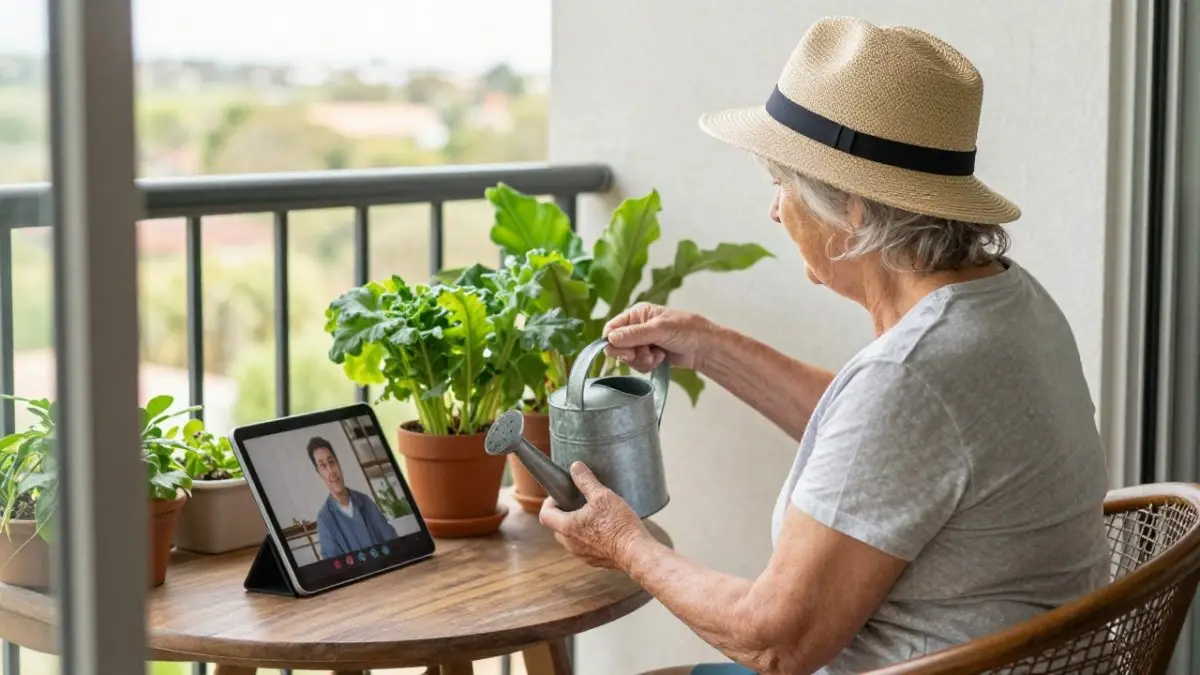
Options worth trying:
- Community garden plots and garden clubs
- Library reading and craft groups
- Men’s sheds and repair cafes
Getting Online Without the Intimidation
You do not need to be tech-savvy to use video calls. Most platforms now use one big button, and family can set it up for you.
- Ask a relative to save the app to your home screen.
- Practise one call with a patient friend first.
- Write the steps on paper and keep them nearby.
If Zoom feels daunting, our plain-English guide on how to use Zoom as a senior walks through joining a call step by step. Watch out: sharing personal details with strangers online is a real risk, so only accept calls from people you know.
Support for Loneliness in Older People
Support for loneliness in older people ranges from informal befriending to formal counselling, and the practical challenge is usually not knowing what exists or how to judge whether it suits you.
Befriending services pair you with a volunteer for regular friendly contact. Peer groups connect you with people in similar situations. Both are low-pressure and usually free. Structured programs add a facilitator, a regular time, and a shared activity.
How to Find and Assess Local Support
Start with the organisations that already hold a list of what is available in your area. Rather than ringing around at random, work through these in order:
- Your local council’s aged services team, they usually keep a directory of social groups, transport help, and befriending schemes.
- Community health centres, they can point you to programs and, if needed, to a GP or counsellor.
- Neighbourhood houses and libraries, noticeboards and staff are often the fastest route to small local groups.
Before you commit to a group or service, ask a short set of questions. A good organiser will welcome them:
- What happens in a typical session, and how long does it run?
- How many people usually attend, and what is the age range?
- Is the venue accessible, step-free entry, hearing loop, accessible toilet, parking or public transport nearby?
- Is there a cost, and are concessions available?
- Can I visit once before deciding, and is there someone I can speak to beforehand?
- What are the arrangements if I need to stop attending?
A common pattern is that people try one group, find it is not the right fit, and conclude that groups do not work for them. It is worth trying two or three before deciding.
The evidence on group programs is mixed. A systematic review of loneliness interventions judged the evidence for group-based exercise reducing loneliness to be low certainty. That does not mean groups fail.
When Loneliness Needs Professional Help
Sometimes loneliness sits on top of depression, grief, or anxiety. Those need proper care, not just a busier calendar. Loneliness itself is not a personal failing, and seeking help for persistent distress is no different from seeking help for a persistent physical symptom.
Reach out to your GP if you notice:
- Persistent low mood for weeks
- Losing interest in things you loved
- Sleep or appetite changes
A GP can refer you to a psychologist under a mental health care plan, which can reduce the cost of sessions. Cognitive behavioural therapy and mindfulness are both used to help people manage difficult thoughts around isolation.
How to Combat Loneliness With a Personal Action Plan
A personal action plan turns good intentions into a weekly routine, but a plan that ignores your energy, mobility, interests, and comfort with socialising will not survive a low week. The version below starts with a short self-check, then builds a first week around it. Keep it small enough that a flat day does not derail it.
Step 1: Take Stock Before You Plan
Spend five minutes answering four questions honestly. There are no right answers, and you do not need to share them with anyone.
- Energy: do you have more good days or more tired days in a typical week?
- Mobility: can you get out easily, only with help, or not at all some weeks?
- Interests: what did you enjoy doing before your circumstances changed?
Your answers point to a starting point. Someone with low energy and low comfort with groups should begin with one phone call, not a hall full of strangers. Someone who is mobile and misses a hobby should begin with a single visit to a group built around it.
Step 2: Build Your First Week
Use the table as a menu, not a checklist. Pick the two rows that match your answers above and ignore the rest for now.
| Step | What to Do | How Often | Best For |
|---|---|---|---|
| 1 | Ring one person | Daily | Low energy, low comfort with groups |
| 2 | Leave the house, even briefly | Daily | Limited mobility, if only to the front garden or letterbox |
| 3 | Attend one group built around an existing interest | Weekly | People ready for small groups |
| 4 | Try one online call with family or a friend | Weekly | Distance, transport barriers, or limited mobility |
| 5 | Review and adjust | Monthly | Everyone, keeps the plan realistic |
Start with just steps one and two. Add the rest once they feel normal.
Step 3: Plan Around Your Barriers
The plan only works if it accounts for what actually gets in the way. A few common barriers and realistic workarounds:
- Bereavement: grief can make social contact feel disloyal. Start with people who knew the person you lost, and say so if you find gatherings hard.
- Hearing or vision loss: ask venues about hearing loops, good lighting, and seating near the front. One-to-one contact is often easier than a noisy room.
- Disability or limited mobility: ask about step-free access, accessible toilets, and whether a support worker can attend with you.
Watch out: if you set a plan that assumes every week will be a good week, one bad week can make you abandon it. Build in a fallback, on a low day, do step one only, and count that as a win.
When you are ready to commit to something regular, you can join The Garden Club and meet others who share your interest.
Joining a Gardening Community to Combat Loneliness
A gardening community works for loneliness because it pairs a calm, absorbing hobby with regular contact.
If you are weighing up a local group, our honest look at whether social gardening groups are worth joining covers what to expect. And if you are ready to find people nearby, this guide on how to meet gardening friends shows where to start.
Gardening Club Australia is an online community built for exactly this.
Here is the honest limitation: an online club cannot replace a cuppa in person.
Loneliness in later life is common, but it is not a fixed sentence.
If you want company that revolves around something you already love, Gardening Club Australia is here.
Frequently Asked Questions
What is the difference between loneliness and social isolation?
Loneliness is the feeling of wanting more connection than you currently have, while social isolation is the practical lack of contact with other people. You can feel lonely in a crowded room or be socially isolated without feeling lonely. Knowing which one applies to you changes the plan: isolation calls for more contact, while loneliness often calls for closer, more meaningful relationships rather than simply more people.
How can family members support a lonely older person without taking over?
Start with a regular, predictable call or visit rather than a one-off grand gesture, because routine builds trust. Ask what kind of contact they actually want instead of assuming. Offer practical help with transport to a community group, library or senior centre, and help them try a video call if they are unsure about technology. If low mood, poor appetite or withdrawal persists, encourage a conversation with their GP rather than trying to manage it alone.
Can hobbies really help with loneliness in later life?
Hobbies help most when they put you in regular contact with the same people, because friendships grow from repeated, low-pressure time together. A shared interest gives you something to talk about before you have to talk about yourself. Gardening suits this well: there is always something to ask, show or compare. The research on group activity and loneliness is mixed, so treat a hobby group as a way to meet people, not a guaranteed cure.
When should an older person seek help for loneliness?
Seek help if loneliness has lasted weeks or months, is affecting sleep, appetite or motivation, or if you have stopped doing things you used to enjoy. Talk to your GP first, who can check for physical causes and refer you to a psychologist for approaches such as cognitive behavioural therapy. If you ever feel hopeless or have thoughts of harming yourself, contact Lifeline on 13 11 14 or see your doctor straight away.
